


Optimizing Bottom Line With Vineyard Information Management
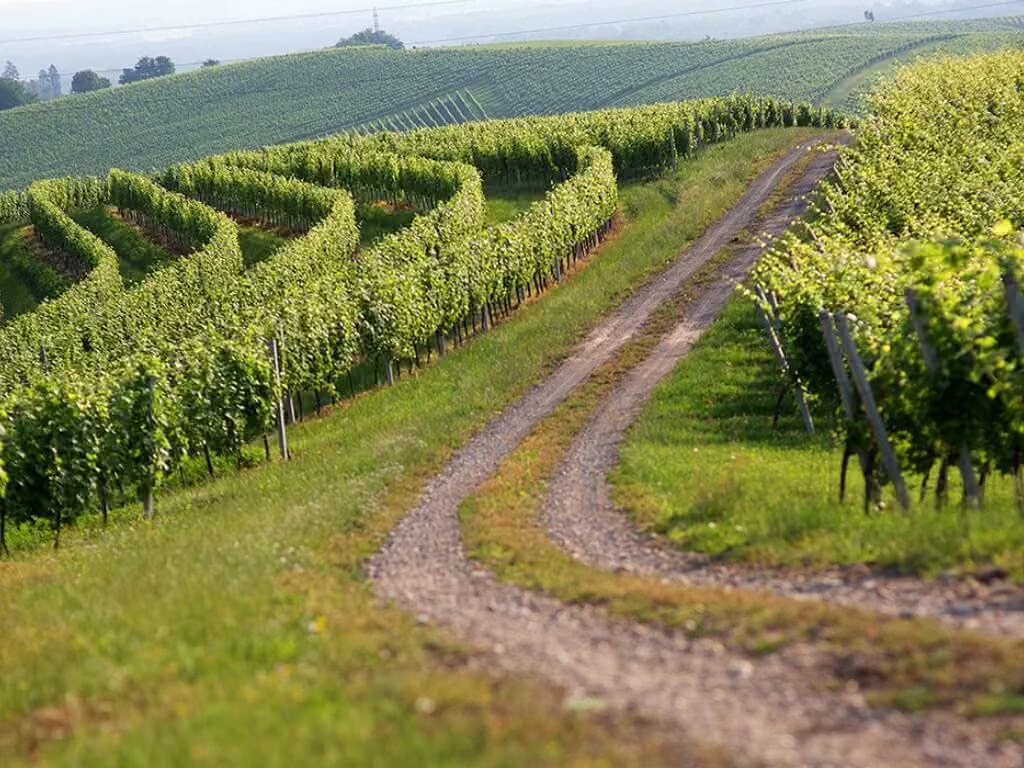
Like in every industry, also in farming, it is important to be making the right business decisions every day: be it operational decisions like when to spray, for how long to irrigate, decisions about how to manage the teams, or decisions about which inputs and equipment to buy – it all boils down to making the right steps that will bring the best final results. Even though, as a vineyard manager with plenty of experience likes to say, “farming is not a spreadsheet”, he also acknowledges that spreadsheets are still very important to have - in order understand the big picture of what is going on in the vineyards.
One distinguishing power that Vineyard Management has, compared to all of the other systems that address only one aspect or two of the vineyard management, is the fact that Vineyard Management addresses all vineyard management aspects: from operational decision making, through creation of working tasks, up to management of the workers and machinery, finally with the ability to observe the financial implications on top of it – and to print reports about the work, which may be then observed by the auditors.
Different customers of ours, of course, use the system to a different degree: our customer base includes boutique producers with the number of hectares of the vineyard that one can count on the fingers of a hand, up to the producers with several hundred hectares.
The basic principle of growing vines is the same, no matter you are a smaller or larger wine producer. However, due to the number of vines and the amount of crop produced, smaller vs. larger producers need different information management support. That's why Vineyard Management offers multiple tiers - starting with Vineyard Management Lite for smaller wine producer who wants to reduce water usage and lower the number of spraying applications and needs only basic traceability records, and more complete vineyard management system versions for larger wineries that also need a system for organizing work, people management, costs tracking and more detailed data analysis.
Smaller Wine Producers Up To 20 Ha Of Vineyard Area
A German family-based, high quality boutique winery, Weingut Gebert, uses a big portion of Vineyard Management system, with some of the advanced features included, to keep track of all information related to vineyard management, in order to gain more insight into their operations easily: “It’s definitely an interesting upgrade to our traditional way of keeping records, as it allows us to see things from multiple perspectives: from the information about the microclimate in our vineyards, through cost and time overviews, all the way to being able to print structured work data on paper.” However, normally, smaller wineries use less functionality of the system than the big ones. Some winegrowers, for example, use Vineyard Management software only for traceability records. It turned out that winegrowers can save 8 hours per month of their time due to automated work record keeping.
For a small producer, Vineyard Management is simply a digital calendar which they can use to track the activities. Because it is built specially for the vineyard management, it has all of the input fields for data that growers would write down on paper anyway. “But when they enter their activities in Vineyard Management, they do not only get the ability to print it, but also a number of analyses out of that, because the entries are correlated with weather, soil, and plant data. At the same time, growers are building a historical record of the seasons that will never get lost, as it’s securely stored in Vineyard Management,” adds Matic Šerc from Vineyard Management.
Bigger Wine Producers For Mid-Sized And Larger Vineyards
The situation with information management is somewhat correlated to the size of the production of grapes: just like bigger wineries and vineyard operations produce more grapes, they also produce more data which needs to be managed appropriately. Wineries with several employees, for example, want to also measure the performance of the workers, and the impact of their work – because by combining those factors, one can see whether the decisions, made about which activities will be done in the vineyards, were correct or not, at the end of the season. Vineyard Management as a software solution is addressing exactly this type of data management on the organizational level, helping the vineyard managers get better every year while saving time that they would otherwise use for data crunching during the season.
Another important area of activity is related to the microclimate and micro-location data of the vineyards. Soil and microclimate location directly affect how optimal the conditions are for the vines each season, and therefore which are the locations and vineyards that require focus for certain activities, such as vineyard maintenance during the season, or harvesting towards the end of the growing season. By having all of the vineyards, together with all of their properties and work history, in the Vineyard Management software, one can then also analyze the vineyards on the interseason level and make smarter decisions about next investments in the vineyard.
Even in something as traditional as agriculture, we see that information technology is useful, having all this data nicely in one place can for sure help with making better decisions”, recalls Gorazd Kovačič from Radgonske Gorice, who together with his team of other vineyard managers manages dozens of workers who are working on hundreds of hectares of their vineyards.

